


Are Dust Mites Harmful?
What Are Dust Mites?
Dust mites are insect-like pests which are microscopic. They are known to generate most of the allergens that trigger allergic reactions in people
House dust mites thrive in high humidity environments which moistens their major food source: human skin scales.
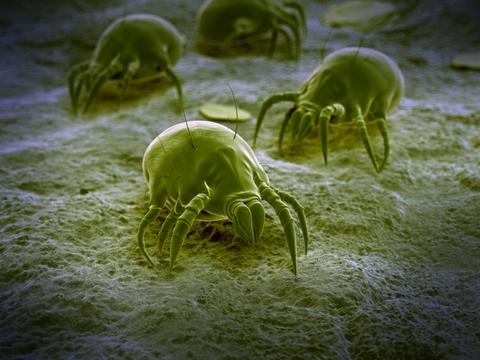
Did you know -It is the droppings of the dust mites which trigger the asthmatic problem!
They excrete a range of highly allergenic proteins that have been identified both as a causal mechanism in the development of asthma, and as irritants likely to trigger and exacerbate asthmatic symptoms.
Dust mites are microscopic and that means you cannot see them with your naked eye.
The majority of dust reservoirs in dwellings contained house dust mite allergen levels above the WHO sensitisation threshold of 2 µg/g in fine dust, with 56% of beds found to contain concentrations known to cause an immediate acute reaction (10 µg/g)
Our dwellings are becoming warmer and more humid: conditions that are ideal for House Dust Mite infestation and proliferation. This is likely to be a key variable in driving asthma allergic reactions

It is estimated that the number of people with asthma will grow by more than 100 million by 2025!
Similar to asbestos, a significant proportion of the current asthma pandemic and ill health that is being driven by poor indoor air quality is preventable if the Scottish and UK governments are willing to recognise the existing evidence base. (see Keele University Research report)
Depending on the humidity and temperatures, the life cycle of the dust mites takes between 19 to 30 days. Females that have mated live for approximately two months.
“Home Fever” is a term used by Allergy UK to describe out of season hay fever symptoms and they estimate that 12 million people are allergic to their own home!
Allergy UK suggests it is triggered by Allergens such as dust mites, moulds, cleaning products and pets.
Pet Dander Behind The Radiator
Radiators can potentially circulate air which contains pet dander, continually exposing occupants to allergens.
Another risk factor aside from household dust is pet dander. Pet dander is dried skin flakes from an animal which are small and become airborne, these can be inhaled and in turn trigger asthma.
This kind of asthma is called “allergic asthma”. However, people can be an asthma sufferer but have no adverse effect to pet dander unless they are themselves allergic (Asthma UK, 2016).
Conclusion
It is now becoming evident that dust accumulation and circulation in modern airtight homes could be having adverse effects on occupant wellbeing; when using our central heating during the winter months when indoors for longer periods of time, with increased exposure levels of allergens in the air we breathe indoors from dust particles being circulated containing allergens.
We recommend you should consider your radiators as a possible source of increased exposure levels of allergens.
Dust is obviously bad for you; Radiators heat the air which rises and spreads the dust around by cleaning behind them at regular intervals this can help alleviate the problem.
Cleaning behind your radiator has proven to manage the removal of dust mite allergens. By cleaning behind radiators in hospitals in the UK it has proven to manage allergens plus the infection control of the so-called superbug MRSA and C-diiffle.
By being able to fully access your radiators for periodic cleaning to remove the dust this could make a significant contribution to improving your health.
